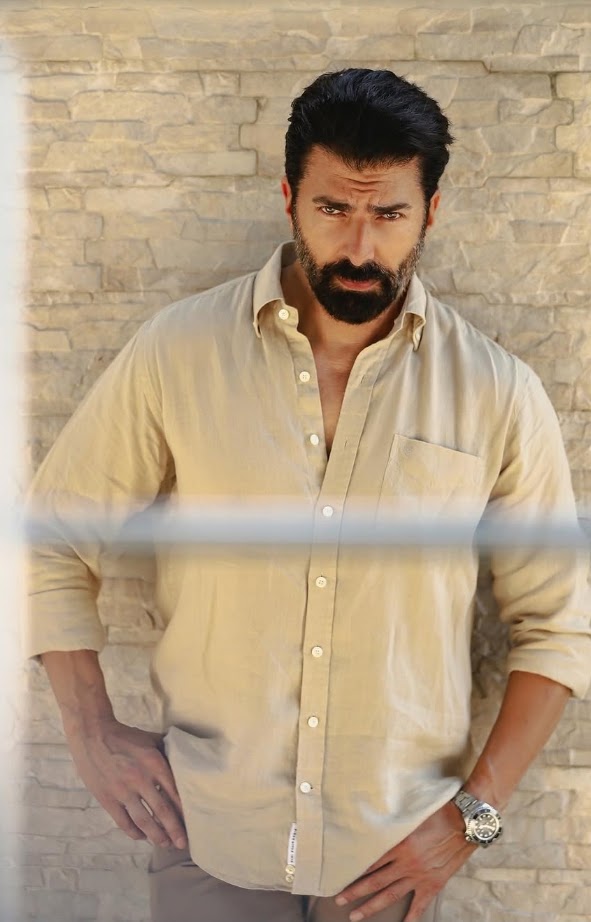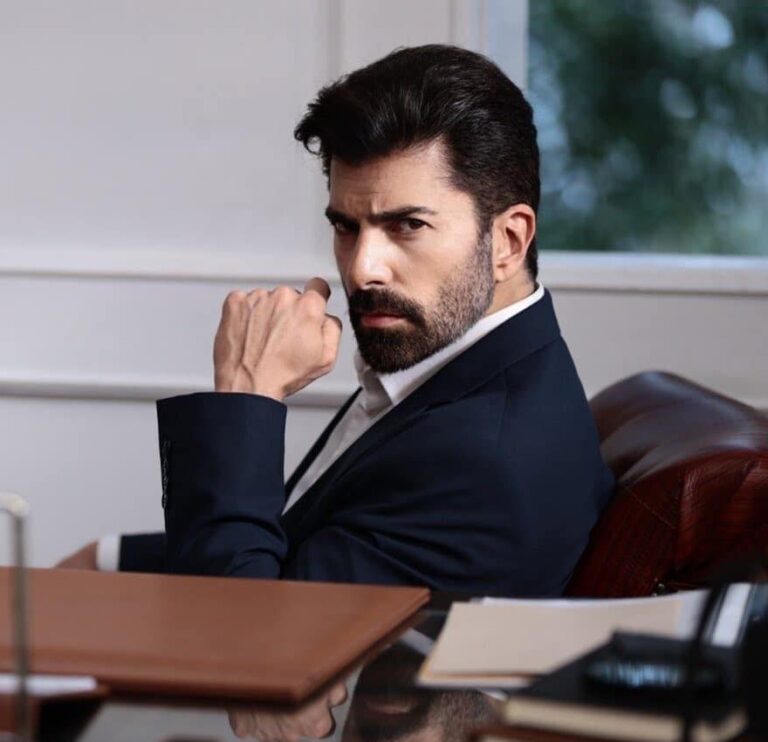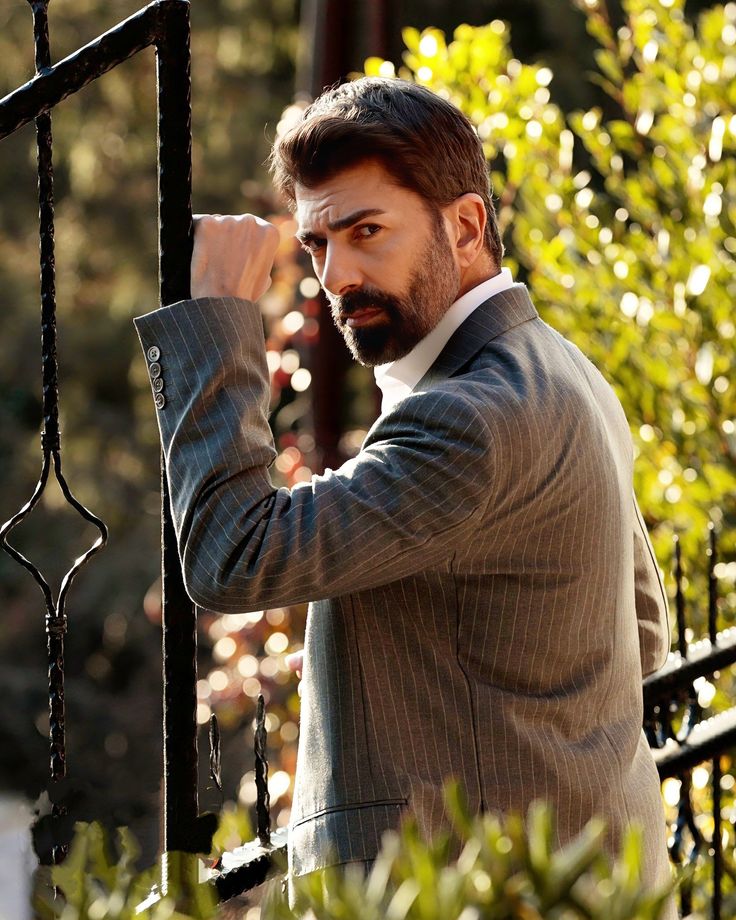
There is a density in Cenk Torun that time has not worn away, but rather refined. His life’s trajectory is measured not only by the characters he has portrayed, but by the silences that have crossed his path and the returns that have redefined his presence, building, in his own way, his permanence. This density does not arise by chance; it is rooted in his origins, shaped by the contrasts between family tradition and art that permeate his life story.
His mother, Nurdan Torun, grew up in Kütahya, in the Turkish countryside, within a deeply religious, rigorous, and disciplined family environment. While still very young, she met Salih Enver Torun (in memoriam), a native of Ankara, whom she would later marry. This meeting brought together distinct paths. While Nurdan began a journey toward building a family, Salih, a medical representative, became one of the primary supporters of his wife’s talent. On March 24, 1974, in Ankara, their first son, Cenk Torun, was born.
During his childhood, Cenk relied on the care of his maternal grandmother while his parents worked to provide for the family. It was in this environment, amidst traditional values and close bonds, that Cenk spent his early years, surrounded by love and warmth. Later, his brother Tolga was born, four years his junior. The close relationship with his grandmother and the extended family structure contributed to the formation of his character, a trait that would become one of his hallmarks.
He lived in Ankara with his family despite the difficult times of that era. Changes began gradually when his mother was discovered by Fahrettin Aslan, who invited her to be the leading star at the Maksim Gazinosu Theater in Istanbul. Subsequently, due to his mother’s relocation, Cenk and his brother remained in Ankara with their father while Nurdan established her singing career. Cenk’s bond with his father during this period was deeply significant, a reference point of love and presence that left a lasting impression on him. Distance then became part of this period, silently reshaping the family dynamic.
As a determined young man in high school, he moved from Ankara to Istanbul. There, in the metropolis and in search of his own path, his professional, intellectual, and artistic development began to take shape. He attended Marmara University, graduating in Hotel Management, and studied at the Müjdat Gezen Art Center, one of Turkey’s most respected institutions for actor training. It was there that his relationship with acting moved beyond the realm of possibility and began to materialize.
His first contact with the camera occurred in 1994, in Yıldız Tilbe’s music video “Delikanlım”—a brief appearance, yet enough to mark his entry into the artistic universe. The following year, he made his television debut in Palavra Aşklar, playing the character Hüp. In 1996, he consolidated his presence with the series Çılgın Bediş, a role that brought him widespread recognition and established him as one of the recognizable faces of his generation in the role of Oktay. During the same period, his image also circulated in the pop music scene, notably in the music video “Yaşanacaksa Yaşanacak” by the group Çıtır Kızlar, expanding his presence beyond television.
In the early 2000s, before starting his military service, he received an invitation to play the character Polat Alemdar in the series Kurtlar Vadisi. However, due to unresolved mandatory military obligations at the time, legal and logistical constraints prevented him from taking on the role. Between 2001 and 2003, mandatory military service imposed a concrete pause on his artistic career, taking him away from the screens to fulfill his civic duty. Upon his return, life dealt him a heavy blow: the sudden death of his father, occurring on the very day he completed his military service.
This loss affected him profoundly, leaving a visible mark and silently reshaping the course of his life. It took him nearly two years to recover; at the time, he found himself unable to act. Acting demands emotional wholeness, and he was not whole. In the years that followed, his trajectory moved away from what had previously seemed his natural axis. The acting career that had marked his rise no longer occupied the center of his professional life. In its place, other activities gained ground.
From 2008 onward, this shift intensified. His presence on screen became increasingly rare, marking a prolonged departure from television that would span nearly a decade. During this interval, his professional path shifted to other areas, while acting remained in the background. With his degree in Hotel Management, he began working directly in the sector as an entrepreneur in the restaurant and food industry. This experience provided him with discipline, human connection, and the opportunity to explore other cultures. Although restaurant management became the primary axis of his professional life after 2008, his passion always remained on set, in front of the cameras; he felt that one day, he would return.
His artistic presence became sporadic, marked by a distancing that was explained not only by professional choices but by a broader process of personal reorganization. This hiatus, however, did not represent a definitive break with acting. Rather, it was a silent suspension an interval that did not interrupt his trajectory but temporarily diverted it toward other paths. Having a second profession also gave him the freedom to be more selective. Only years later would his presence on screen become effective again, indicating not an abrupt return, but a gradual resumption of a path that was never fully abandoned.
From 2016, his artistic career regained momentum. He participated in the film Şeytanın Çocukları: El Ebyaz and returned to television with Yeter, a move signaling his reintegration into a new moment within the industry. Cenk is often surprised to find projects on the internet bearing his name in which he never participated, he does not understand how this happens! This serves as a warning for his audience to remain vigilant and not fall for misinformation regarding the actor’s life and career.
In the following years, his discreet presence on screen continued, marked by new intervals and changes in direction. His participation in Adını Sen Koy fits this context, representing a phase where professional continuity coexisted with transformations outside the artistic field. In parallel, his trajectory took another turn as he moved toward other activities, including work as a “personal trainer,” a period that once again highlights his ability to reorganize his life in the face of circumstances. At the same time, his life underwent significant changes, conducted with discretion and away from public exposure.
“I love my work and I do not intend to stop acting.” Cenk Torun
This interval, which might suggest a withdrawal, reveals itself instead as another moment of silent preparation. In 2022, a new invitation brought him back to the center of television drama. Invited by the production company Karamel Yapım, he joined the cast of Esaret, stepping into the lead role at the last minute. Before taking on the role of Orhun Demirhanlı, Cenk Torun was experiencing a period of professional transition, waiting for projects that reflected his artistic maturity.
His return in Esaret introduced him to a new generation of viewers, crossing Turkey’s borders and reaching a global audience. His presence on screen carries not only accumulated experience but also the marks of time that shaped his life beyond the reach of cameras, contributing to his personal growth. In this return, he carries not only his expertise but the unfolding of a path built through pauses and choices, navigating significant life changes with characteristic discretion.
He has an 18-year-old son, whom he keeps away from the spotlight as a father attentive to his well-being. His son is the child of a marriage that recently ended in divorce. Once again, his discretion regarding this event reinforces his inclination to preserve his personal life as much as possible. These changes did not interrupt his artistic trajectory, which continues to develop, faithful to the discreet rhythm Cenk has built over the years.
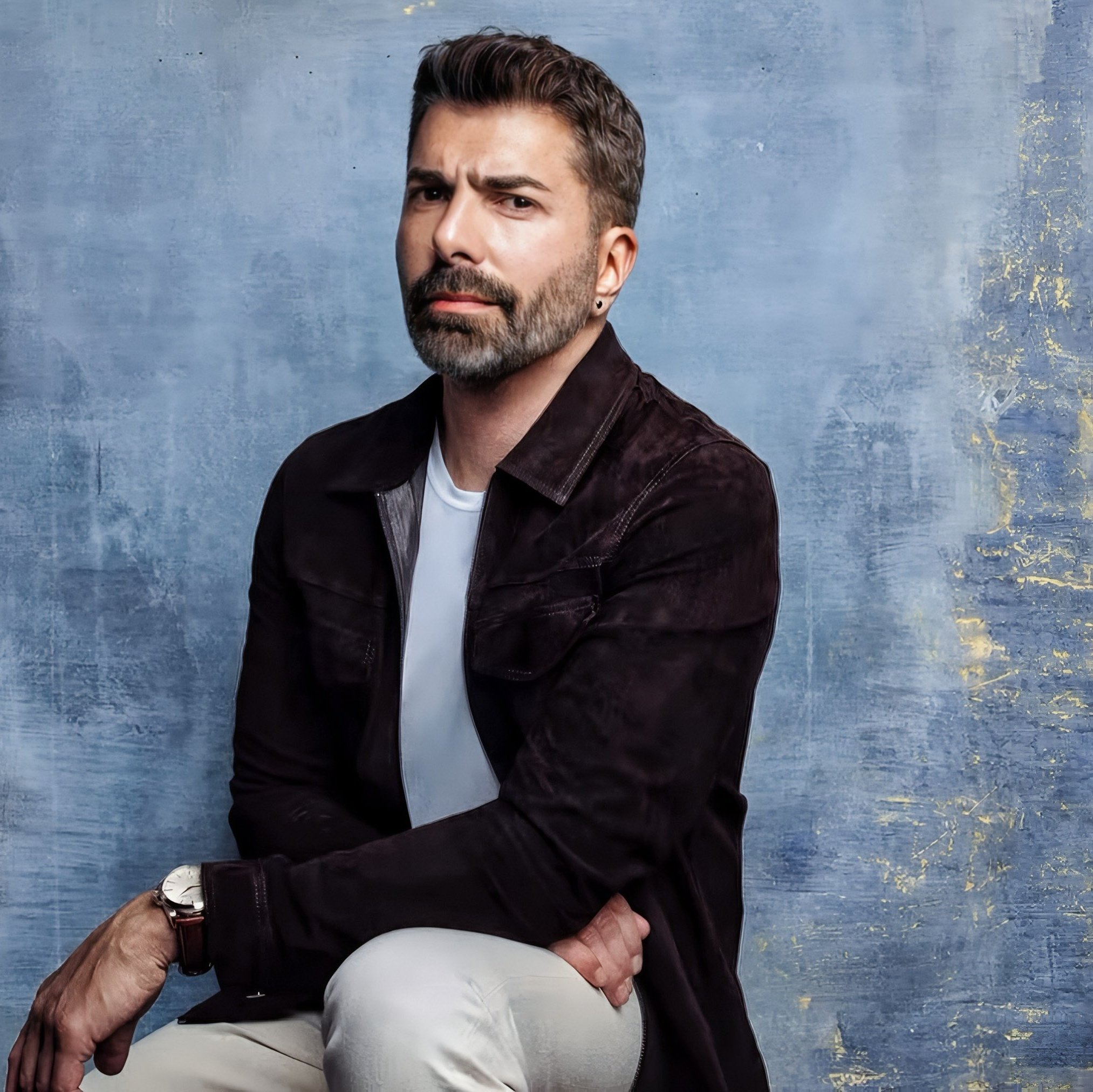
Source: Muhsin Akgün / Instagram @cenktorun
With the conclusion of Esaret, he does not just finish a project; he reaffirms a path that was never guided by linearity. His journey, marked by loss, pauses, restarts, and returns, reveals that his permanence was not found in the constancy of the screen, but in the way he positioned himself in life. What could be read as an interruption reveals itself as construction. More than a new beginning, what presents itself is a continuity shaped by experience, by silence, and by the choices that brought him here.
Currently, Cenk Torun is living a unique and introspective moment in his life. Since the end of Esaret away from continuous on-screen projects, his public presence has become more sporadic, reflecting a more reserved pace. During this period away from constant exposure, he finds balance in the discipline of training, social events, and his public image. The gym, more than a habit, is a lifestyle that has always been part of his life. It is an essential space in his routine, where he keeps not only his body active but also his mind sound, releasing tension and channeling the stresses of daily life.
In the professional sphere, his trajectory suggests a movement guided less by urgency and more by choice. Over the years, he has built a path driven not by immediacy, but by a commitment to projects that align with his own timing. The reach of his most recent work has consolidated a global audience that transcends borders, maintaining his presence with the public through his social media even when off the air. Cenk regrets nothing he has lived. Every experience, whether of joy or hardship, has contributed to his growth as a person, teaching him valuable lessons that have shaped his life. He has learned to live through the pauses, to have patience, for life unfolds day by day,and Cenk is in no hurry.