
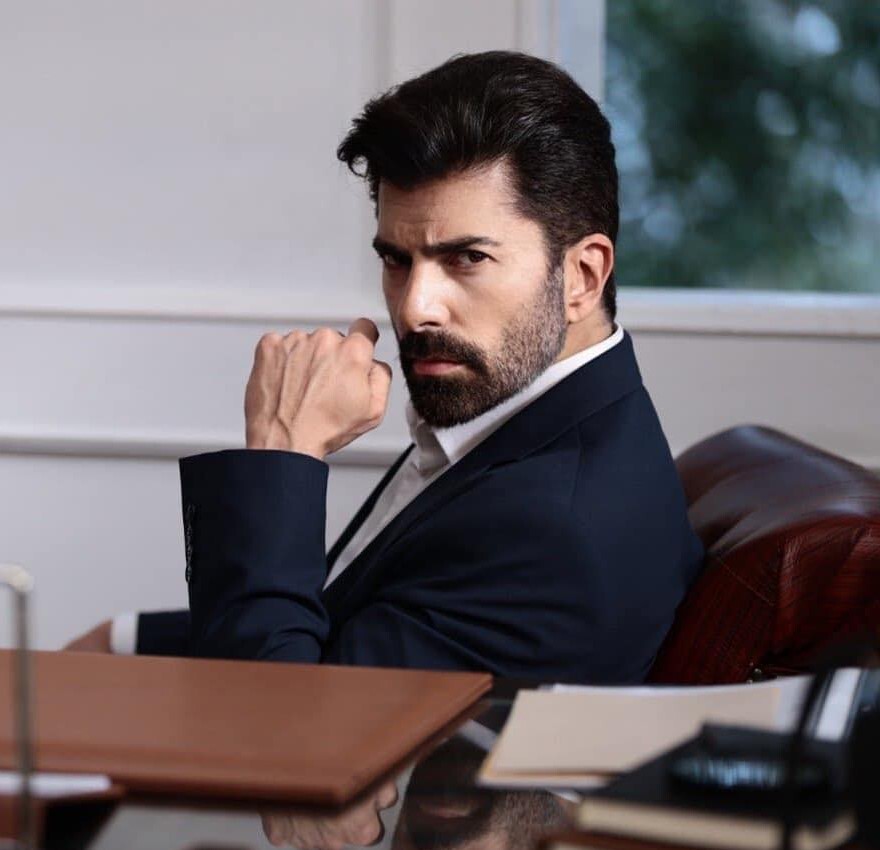
Editorial Note: This article presents an independent analytical perspective. Our goal is to examine the narrative and historical context in a broad, respectful manner, avoiding speculative reports or definitive judgments. We invite our readers to an insightful reflection.
The possibility of Çılgın Bediş returning to the big screen recently stirred the Turkish entertainment press in late July. The youth series that helped define 1990s television is reportedly being prepared as a feature film, according to a report by Birsen Altuntaş. Specifically, it was reported that Polat Yağcı, owner of Poll Films, is leading negotiations with actors Yonca Evcimik and Cenk Torun, who have allegedly agreed to reprise their roles, with a tentative release scheduled for February 2027. At the same time, the project is still classified as being in the preparation phase.
However, at this stage, there is an important distinction between an officially announced production and a project still in development. And it is within this uncertainty that our analysis begins.
For us at BeyondSceneMC, whether or not the film actually comes to fruition is merely the starting point. What interests us, and the actor’s fans, is this: what would it mean for Cenk Torun’s current career to reunite with Oktay nearly thirty years later?
At the helm of Poll Films is Polat Yağcı, a producer who built his early career in music and major events before expanding into television and film. His production company previously brought Sihirli Annem: Hepimiz Biriz to theaters, reviving a television project well known to the Turkish audience. It is within this context that the possibility of Çılgın Bediş emerges, for the production company, as another project drawing on Turkish television nostalgia.
Çılgın Bediş was not simply a teen production. Set in a high school environment, the series combined friendship, music, parties, family drama, romantic crushes, comic situations, and exaggerated humor, all characteristic features of youth productions from that era in the 1990s.
The series originated from a character created by cartoonist Özden Öğrük, originally published in Gırgır magazine. The television adaptation premiered on July 8, 1996, on Kanal D. The initial run resonated immensely with audiences, reaching 70 episodes. It was later revived across different periods, eventually moving to Show TV in 2000 before concluding in 2001.
The Popular Oktay of the 1990s
At the center of this universe were Bediş, played by Yonca Evcimik, a restless, hopelessly romantic teenager and Oktay, played by Cenk Torun. He was the popular guy in school, a basketball player, and the object of Bediş’s unrequited love. The dynamics between the two formed the very language of the series: her crush, the comic scenarios, and the youth behavior drove the engine of that relationship, while humor steered much of the show.
Nearly thirty years later, we are not merely facing an old character who could simply make a comeback. We are looking at a story whose very foundation was inherently tied to adolescence.
Between that young Cenk and the mature, professional actor we know today lies an extensive trajectory featuring diverse roles and career phases.
Furthermore, time hasn’t passed only for Cenk. It has passed for society, for television, for humor, for cultural norms, for how romantic relationships are portrayed, and for the audience that once followed that story.
The issue arises when a character conceived within a specific age group and cultural framework must be transported into the present.

Source: Social media/respective owners.
Oktay and Cenk
This is why a potential reunion with Oktay would not be just a nostalgic trip. Cenk would not be returning to the point where he left the character. He would arrive at this encounter having built a career vastly different from the one that existed when Çılgın Bediş was on the air.
So, we come to the first question raised by the potential film: would returning to the past add anything to Cenk’s current path, or would it simply place him back into an image that no longer reflects his current professional standing?
The answer does not have to be strictly positive or negative.
Returning to Oktay could mean acknowledging an important chapter of his own history. It could present an opportunity to revisit a character woven into the memory of a generation and, above all, to do so through the lens of an actor who is no longer that young man from 1996.
Yet there is the other extreme. If the story is radically modified to fit contemporary codes, to what extent are we still looking at Çılgın Bediş? How much can a work be altered before the attempt to modernize it ends up erasing the very element that sparked nostalgia in the first place?
The question is whether the character can age along with the actor. That is the central question of this potential project.
When a Character Transcends Time
Here, Top Gun: Maverick serves as a very compelling counterpoint.
We are certainly not suggesting that Top Gun and Çılgın Bediş share any genre or narrative similarities, they do not. Rather, the comparison lies in how a work handles the return of a character decades later.
When Tom Cruise returned as Pete “Maverick” Mitchell in 2022, over three decades after the original film, the narrative didn’t simply try to recreate the young pilot of 1986. The character had aged, accumulated experience, and reached a new stage of life. The story itself integrated the passage of time.
The fundamental difference is that Maverick found narrative room for the character to age alongside the actor. The story acknowledges the elapsed years, presents a seasoned man, and places his past history within a new conflict.
The Case of Çılgın Bediş
In contrast, Çılgın Bediş faces a distinctly different obstacle. Youth was not merely an attribute of the characters; it was built into the story’s structure. The series’ original identity is directly tethered to youth. The school setting, popularity, unrequited crushes, exaggerated situations, and behavioral comedy form the framework that supported the narrative.
Oktay was not just a character who happened to be young. Youth was intrinsic to his very function within that universe.
If Oktay remains exactly as he was, the risk lies in bringing a dynamic built for another cultural era straight into 2026. Conversely, if the production drastically changes this dynamic to make it contemporary, an equally legitimate question arises: how much can they change before Çılgın Bediş ceases to be the work audiences remember?
Nostalgia is a powerful force, but it can also be a trap. Audiences do not preserve characters in isolation; they cherish how those characters existed within a specific era. Reproducing everything exactly as before may highlight what hasn’t aged well. Altering everything may erase precisely what evoked affective memory.
Thus, a potential return would need to solve a delicate equation: how to bring these characters into 2026 without simply repeating 1996, while simultaneously avoiding turning Çılgın Bediş into a completely different story?
That is why nostalgia alone will not be enough to guarantee that a return works.
“If Çılgın Bediş were to be filmed today, I think everything has changed! We have artificial intelligence, social media… The story would have to evolve and take a different direction. I don’t believe it would carry the same feeling. It is best to leave everything in its proper time.” Cenk Torun
The Cenk We Know Today
There is another element that cannot be overlooked: Cenk approaches this potential reunion after having carved out a solid career in television drama.
Over the decades came other roles, other characters, and distinct professional milestones. More recently, between 2022 and 2025, Esaret placed Cenk in the role of Orhun Demirhanlı, a powerful and dramatic character that demanded a different level of screen presence. It broadened the international circulation of his image and brought him closer to a global audience. This consolidated a viewer base that views his career from a fresh perspective, introducing them to a dramatic depth far removed from young Oktay.
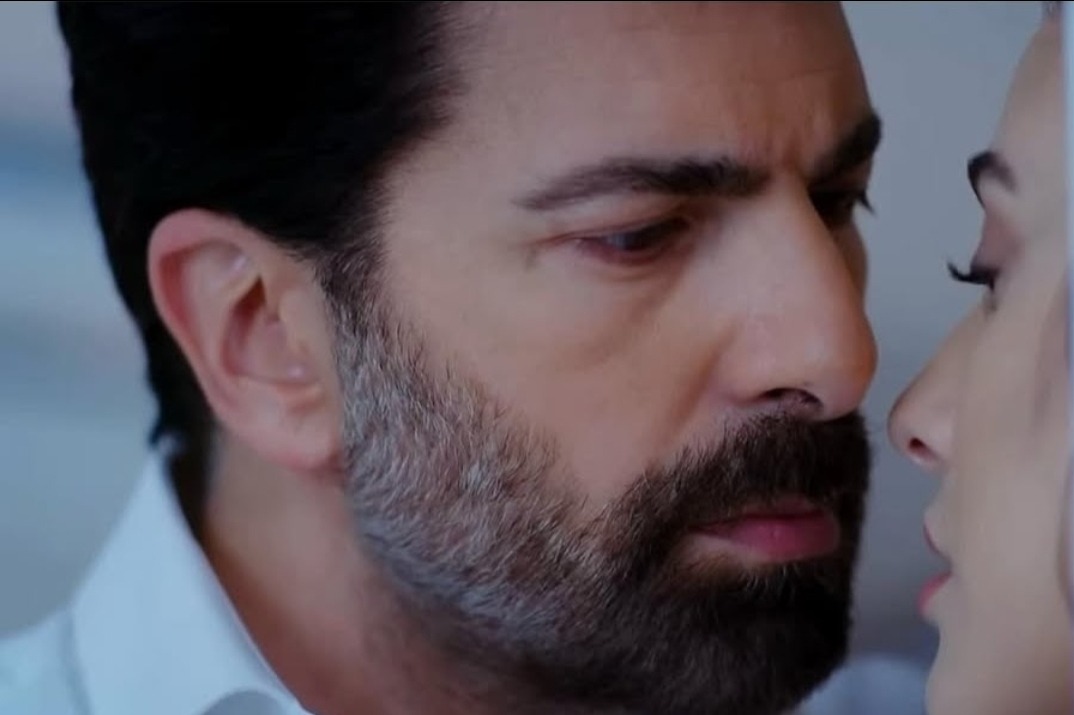
Source: Social media/respective owners.
The international recognition he has gained possesses its own scope and characteristics. The fact remains that today an international audience knows Cenk for what he built after Oktay. This is a shift that cannot be ignored.
For this global audience, Orhun may serve as their introduction to the actor. For an earlier generation, Oktay might be a cherished memory. Suspended between the two is Cenk Torun himself, the professional who built a career across that divide and must be considered before any return is labeled simply as “nostalgia.”
Revisiting Oktay could be a way to honor an important milestone in his history, now enriched by the experience of a mature actor. It could transform nostalgia into a fresh interpretation, allowing Cenk to reclaim a character from the beginning of his career.
However, it could also yield the opposite effect if the project relies solely on repeating a youth plotline that no longer represents who the actor is today.
The goal is to determine whether this past can establish a meaningful dialogue with the professional he has become.
Nostalgia or Risk?
This uncertainty was also reflected among those who follow Cenk today.
In a poll conducted by BeyondSceneMC following the news of the potential production of Çılgın Bediş, 57% of participants viewed the return as a risky career move, while 43% saw it as a positive nostalgic opportunity.
The poll does not claim to represent the entire market, nor does it function as a statistical study. It is simply a snapshot of a community that follows the actor and found itself divided between emotional memory and career trajectory when presented with the same possibility.
The gap is small, which makes the result all the more intriguing: among those who follow Cenk’s journey, nostalgia did not yield a unanimous response. However, we are not looking at an audience that categorically rejected the idea either.
There is genuine affection for Oktay and for what Çılgın Bediş represents, alongside a legitimate concern for Cenk’s current career and everything he has built since.
This division mirrors the exact dilemma placed on the table by this prospective production: the desire to reconnect with a memory and the concern for what Cenk built after it can coexist. And it is this division that best articulates the complexity of this return.
A Return That Remains an Unknown
Whether Çılgın Bediş will actually reach theaters in 2027 is something time will tell. The news exists, the project has been linked to Poll Films, and key names from the original cast have been mentioned, but a possibility in development is not yet a finished film. Given all of this, we would do well to wait and see!
A potential revival return of Çılgın Bediş allows us to reflect on how the industry tries to transform memory into a product, and how actors must continuously negotiate throughout their careers with characters who remain young in the public’s memory while they themselves keep moving forward.
That Oktay is part of Cenk Torun’s professional history is beyond doubt. There is no reason to erase that chapter, much less diminish its importance in his path.
However, Cenk did not stay in 1996. He crossed those nearly three decades, built other characters, matured as an actor, and reached a professional phase where he gained global recognition, most notably for his award-winning portrayal of Orhun Demirhanlı.
Therefore, the real question today is knowing whether Cenk needs to go back to 1996 or whether the best of his journey lies in the present…



One Response
Since I am not familiar with the series—having only discovered Cenk Torun through #Esaret—I do not wish to pass judgment on this matter.
However, my general opinion is that, after so many years, it is best to let things rest.
This does not refer to Cenk’s professional development; rather, it reflects my personal intuition that he is likely to withdraw further into his private life and pursue his other passions.
JT0815 🇩🇪