There is a curious contrast observed by many in the Turkish television landscape in recent weeks. While Kuruluş Orhan works to regain and strengthen its audience for upcoming episodes, the data reveals that the series is not currently among the ratings leaders. The production itself has acknowledged the challenge, investing in narrative restructuring, new characters, antagonists, and expanded settings.
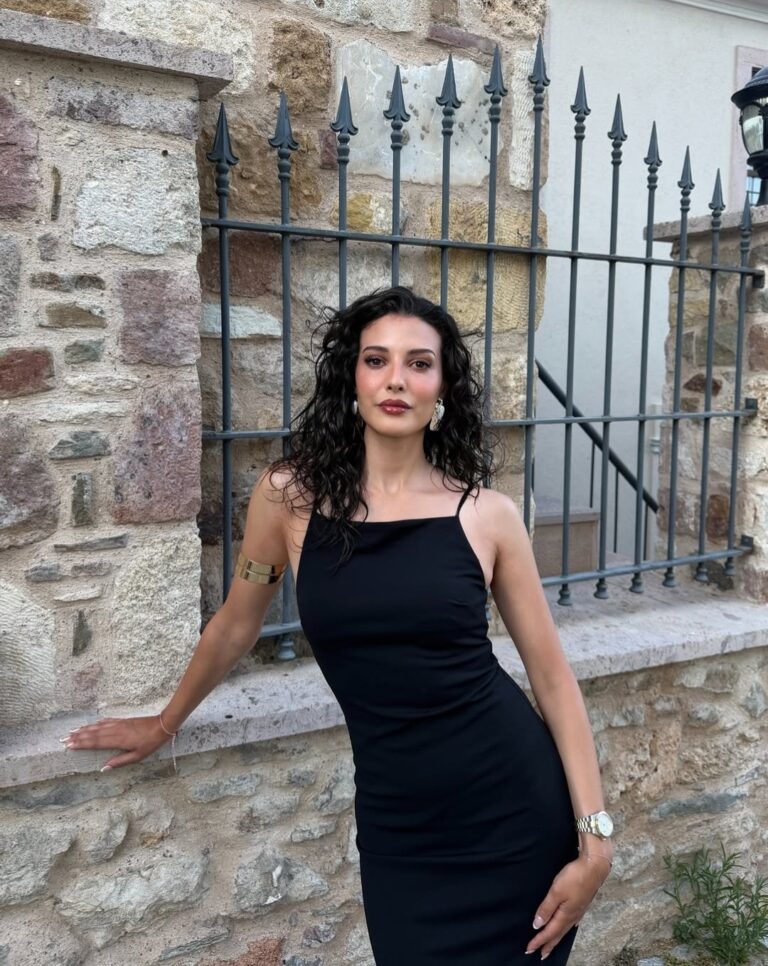
It is precisely within this demanding scenario that the individual strength of a young actress becomes even more evident. While Kuruluş Orhan seeks to elevate its viewership, Mahassine Merabet stepped onto the stage at two major award ceremonies: Altın 61, where she was named Breakthrough Actress, and Magazinci, where she received Best Actress. The actress who became a global phenomenon through Esaret is now navigating a complex professional moment, standing out amid significant career challenges.
This paradox is not accidental. It reveals something deeper about this moment, both for the series and for her trajectory.
The audience fluctuation of Kuruluş Orhan may largely stem from comparison with the previous arc. Years were spent following Osman Bey, creating emotional attachment and narrative familiarity. When a structure changes and a new era begins, resistance is a natural reaction for part of the audience.
This estrangement often begins with the expectation of reliving what has passed. Resistance to the new emerges even before performances are evaluated. From the announcement of the new cast, some viewers rejected the transition outright. This reaction was not a critique of acting or dedication, but a reflection of discomfort with change itself.
It is important to state this clearly: the audience fluctuation is a consequence of narrative transition, not the performance of the new cast, who remain visibly committed to their roles.
A television audience reflects general public interest at a given moment. Popular vote awards, however, measure something different: emotional impact, connection, and loyalty. This is where the equation shifts.
The paradox that some attempt to weaponize actually explains the opposite. Mahassine is winning awards because her recognition was not born within Kuruluş Orhan. It was built through her international impact in Esaret. She entered this project with a global projection that few young actresses possess. Her awards reflect this trajectory and this independent strength. They do not contradict the current moment of the series; they exist on a separate curve.
Her awards come from popular vote, not television ratings. They measure passion, emotional engagement, and the strength of a fandom. Mahassine’s fandom is international, organized, and deeply loyal. They did not forget Esaret. They follow Kuruluş Orhan. And they vote.
Blaming her for the ratings fluctuation is unfair and intellectually dishonest, although such accusations have circulated on social media. Far from being the cause, she is part of a production navigating a difficult transition: a genre experiencing fatigue, a series changing generational focus, a network facing strong competition, and an audience still adjusting after the conclusion of a long-standing arc.
Mahassine, portraying a historically significant character, remains one of the figures generating curiosity, discussion, and visibility for the project.
Her presence is not merely strategic; it is historically essential. Nilüfer Hatun is not simply Orhan Bey’s wife within the narrative. She is the mother of Murad I, the future sultan who expanded and consolidated the Ottoman Empire. The Turkish public knows this history. Nilüfer is one of the most important female figures in the formation of the empire and a cornerstone of dynastic continuity.
As Nilüfer, Mahassine carries the emotional memory of a previous audience, the strength of a fandom built through Esaret, and the historical weight of a character that cannot be erased or replaced. Nilüfer is foundational to the story being told.
In recent episodes, however, the narrative focus of Kuruluş Orhan has expanded. With the introduction and growing prominence of Asporça, portrayed by Alina Boz, the storyline has deliberately divided its attention among multiple arcs. This shift has resulted in Nilüfer Hatun appearing more sparingly in certain chapters , a creative decision rooted in narrative structure rather than character relevance.
Such transitions are common in long-form historical dramas, particularly during periods of dynastic expansion and political consolidation. The presence of multiple wives, alliances, and power dynamics reflects the historical complexity of Orhan Bey’s era. Nilüfer’s reduced screen time in specific episodes does not diminish her historical or narrative importance; it underscores the series’ attempt to balance parallel storylines during a formative phase.
This week, Mahassine was awarded for her presence, performance, emotional connection, and the loyalty of a fan base that followed her from an international melodrama to an epic historical stage.
Her awards for Best New Actress and Best Newcomer do not contradict her career path; they validate it. Esaret introduced her to the world. Kuruluş Orhan positioned her within the elite sphere of Turkish drama.
Her silence regarding Kaftan Kadjan, her Moroccan series recently premiered on Al-Oula TV, is not a weakness but a strategic decision. Likely guided by contractual obligations and professional management, this choice reinforces her focus on consolidating her image as an elite actress within the demanding environment of Bozdağ Film and the international market.
Mahassine operates on two levels: artistic and strategic. She grows at the very moment the series seeks to re-engage a nostalgic audience. This is not a contradiction. It is evidence that she has built something larger than any single production.
We wish Mahassine and her colleagues in Kuruluş Orhan continued success.The series may fluctuate. Mahassine does not.
Sometimes a star shines beyond its own constellation. That is the paradox — and perhaps the beginning of a new chapter in this narrative.